Narrative Illustration on Qadjar Tilework in Shiraz

2018, Verlag für Orientkunde

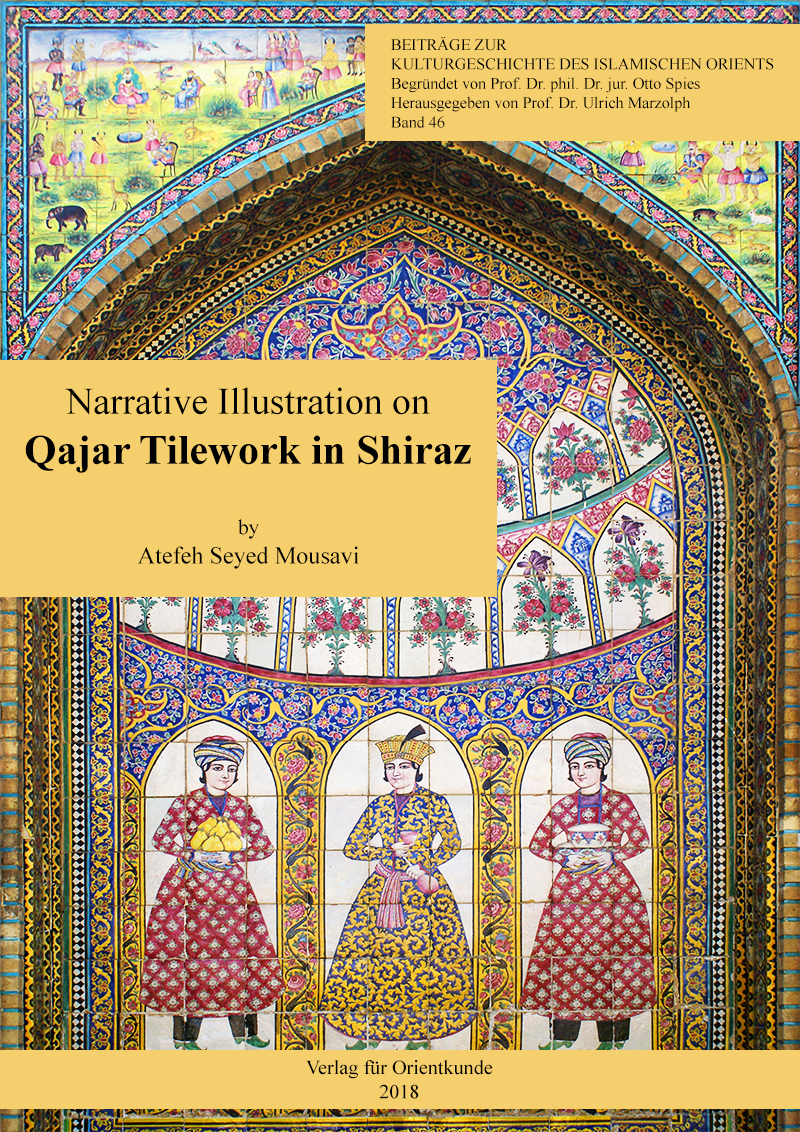
Tilework illustration of the Qajar period has received comparatively little scholarly consideration. This applies specifically to Shiraz, where the art was abundantly practiced. My book, the first of its kind, presents a detailed analytical study of Qajar tile painting in Shiraz.

The material has been collected during two extensive fieldwork trips. Having collected more than 5,000 photos, I have chosen 42 historical buildings in Shiraz with tile work decoration for a detailed analysis, supplying minute descriptions for each and every image together with a solid documentation of the tiles' respective location in the buildings.

My study identifies, classifies and analyzes the depicted themes and the craftsmanship behind it. Particular attention has been devoted to a detailed discussion of the prominent themes, their argument and motivation, as well as to popular artists of the period. In addition to the study, my work contains ample visual documentation.

EAN: 978-3-936687-46-3
Paperback: Vol. 1, 335 pages (Texts); Vol. 2, 268 pages (Coloured Images)
Order Books: verlag.fuer.orientkunde@web.de
www.verlag-fuer-orientkunde.com

Note: This book has been published with the financial support of The Barakat Trust.
My doctoral thesis My doctoral thesis

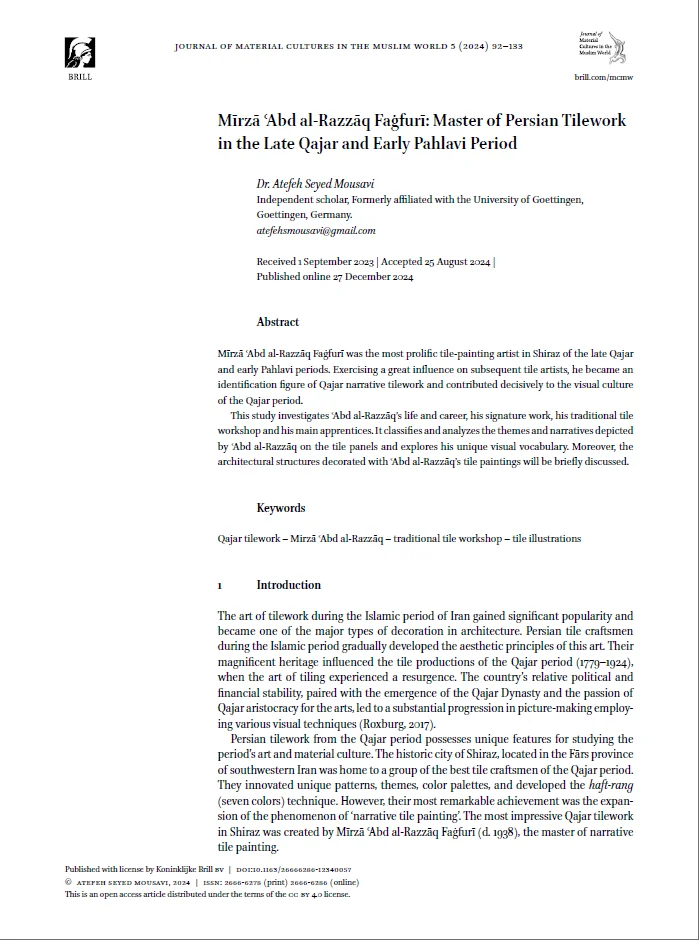
Mīrzā ʿAbd al-Razzāq Faġfurī: Master of Persian Tilework in the Late Qajar and Early Pahlavi Period

2024, Brill: Journal of Material Cultures in the Muslim World

Abstract Mīrzā ʿAbd al-Razzāq Faġfurī was the most prolific tile-painting artist in Shiraz of the late Qajar and early Pahlavi periods. Exercising a great influence on subsequent tile artists, he became an identification figure of Qajar narrative tilework and contributed decisively to the visual culture of the Qajar period. This study investigates ʿAbd al-Razzāq’s life and career, his signature work, his traditional tile workshop and his main apprentices. It classifies and analyzes the themes and narratives depicted by ʿAbd al-Razzāq on the tile panels and explores his unique visual vocabulary. Moreover, the architectural structures decorated with ʿAbd al-Razzāq’s tile paintings will be briefly discussed.

Click here for more information

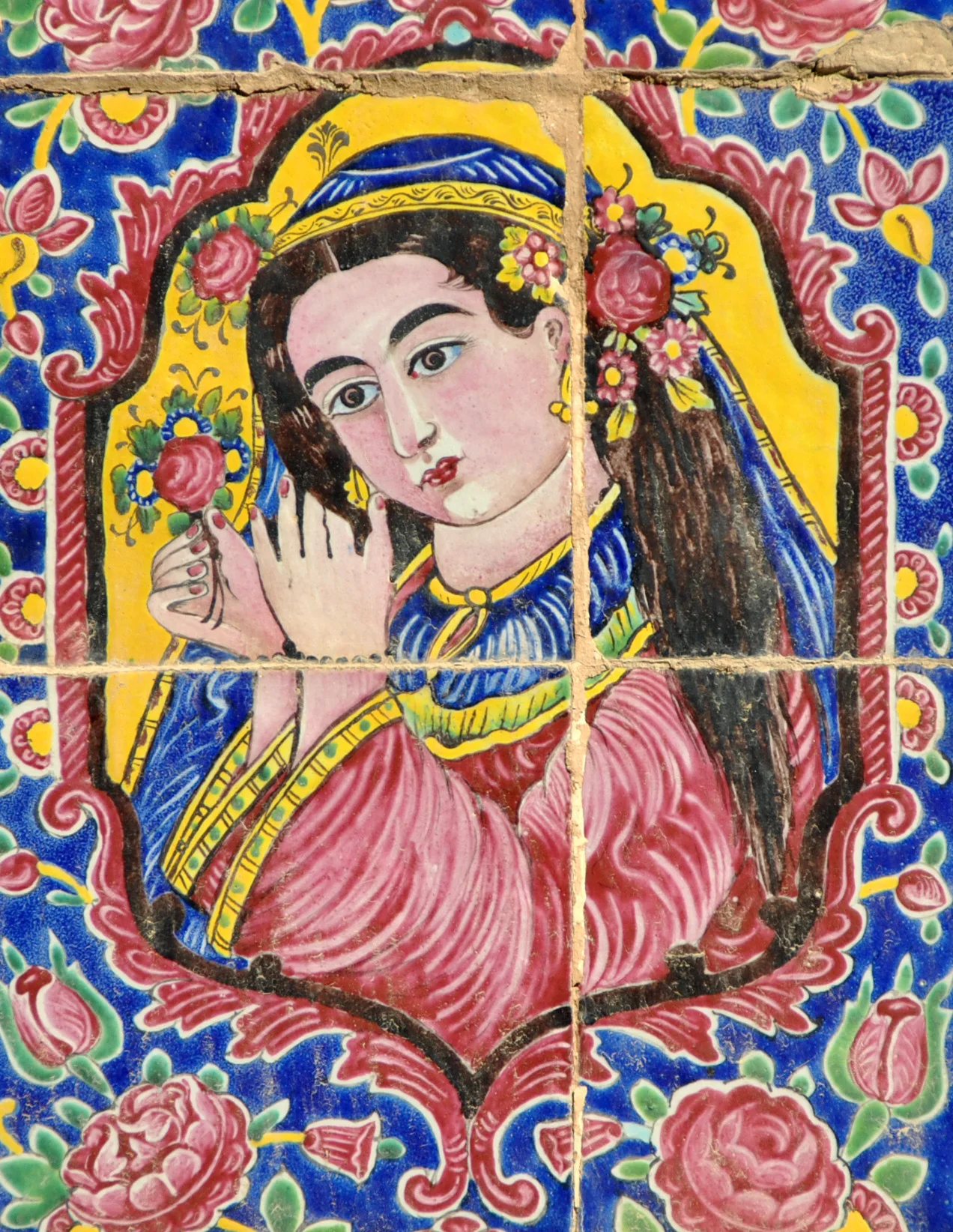
Master of Persian Tilework Master of Persian Tilework
Tilework Tilework

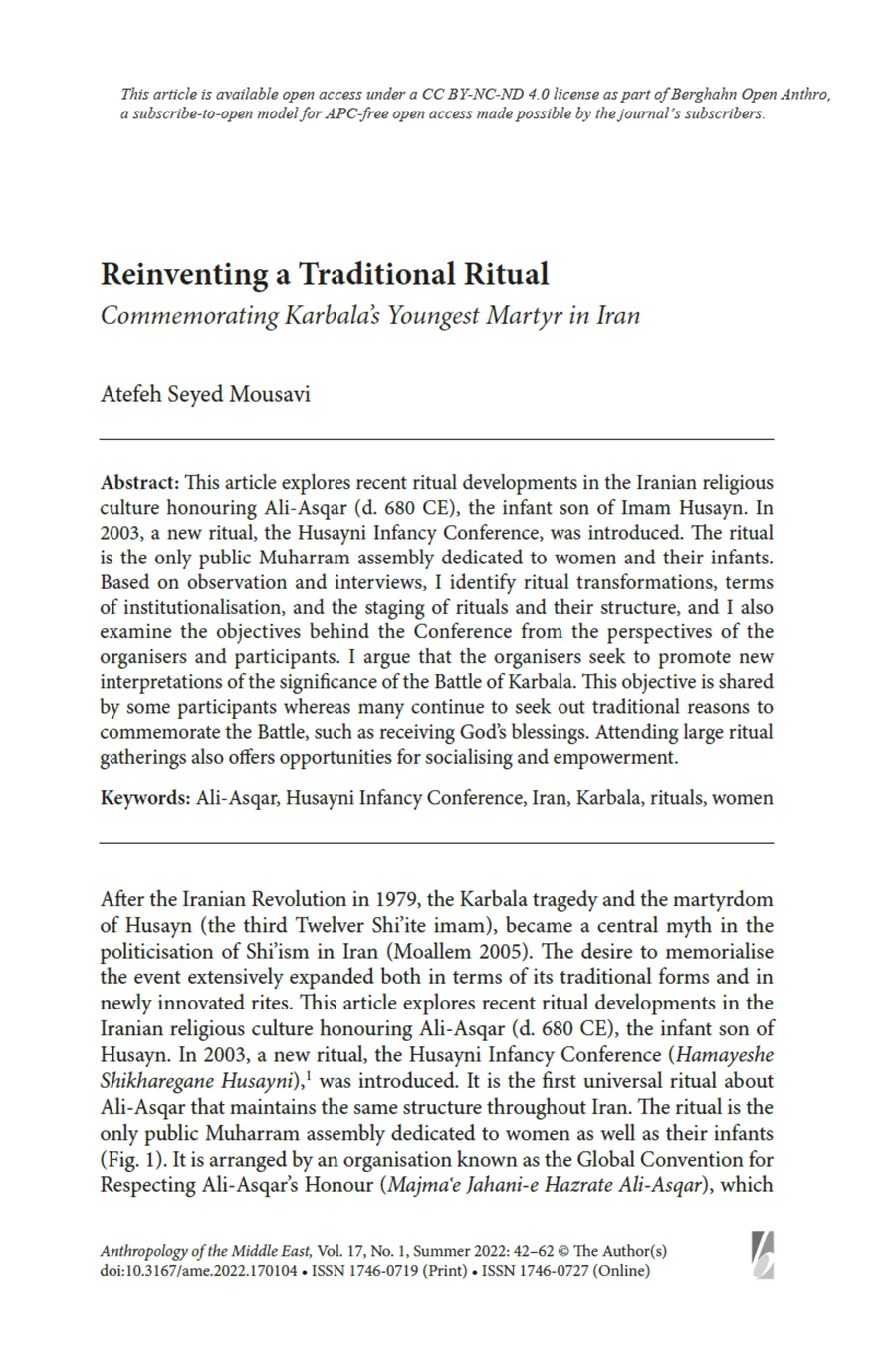
Reinventing a Traditional Ritual

2022, Anthropology of the Middle East

After the Iranian Revolution in 1979, the Karbala tragedy and the martyrdom of Husayn (the third Twelver Shi'ite imam), became a central myth in the politicisation of Shi'ism in Iran (Moallem 2005). The desire to memorialise the event extensively expanded both in terms of its traditional forms and in newly innovated rites. This article explores recent ritual developments in the Iranian religious culture honouring Ali-Asqar (d. 680 CE), the infant son of Husayn. In 2003, a new ritual, the Husayni Infancy Conference (Hamayeshe Shikharegane Husayni),1 was introduced. It is the first universal ritual about Ali-Asqar that maintains the same structure throughout Iran. The ritual is the only public Muharram assembly dedicated to women as well as their infants (Fig. 1). It is arranged by an organisation known as the Global Convention for Respecting Ali-Asqar's Honour (Majmaʿe Jahani-e Hazrate Ali-Asqar), which the organizers simply refer to as ‘the Convention’.2 In this article, I discuss why the ritual is popular amongst urban, middle-class women.

Click here for more information

Anthropology of the Middle East Anthropology of the Middle East
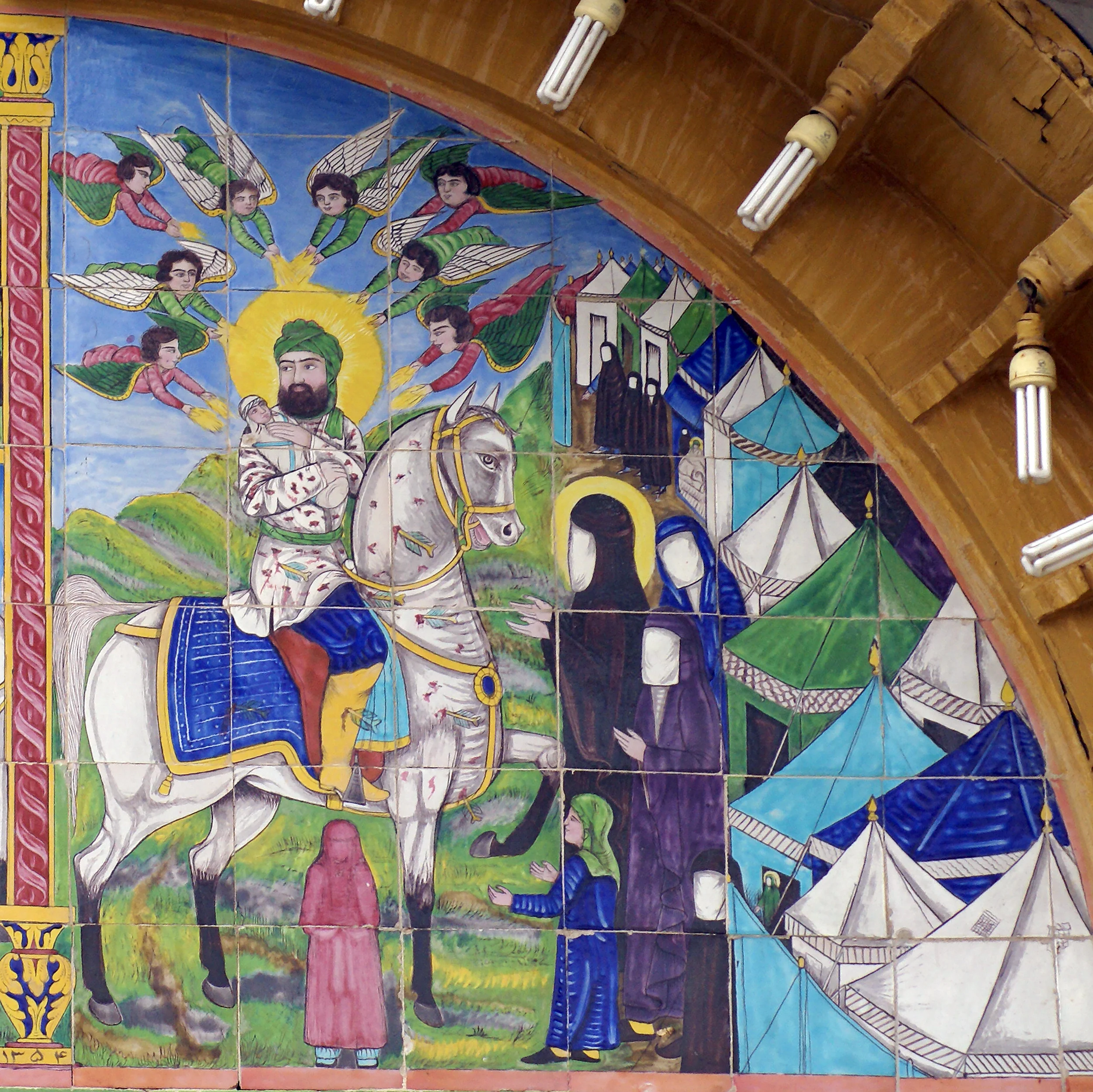
Portrait of Ali-Asqar Portrait of Ali-Asqar

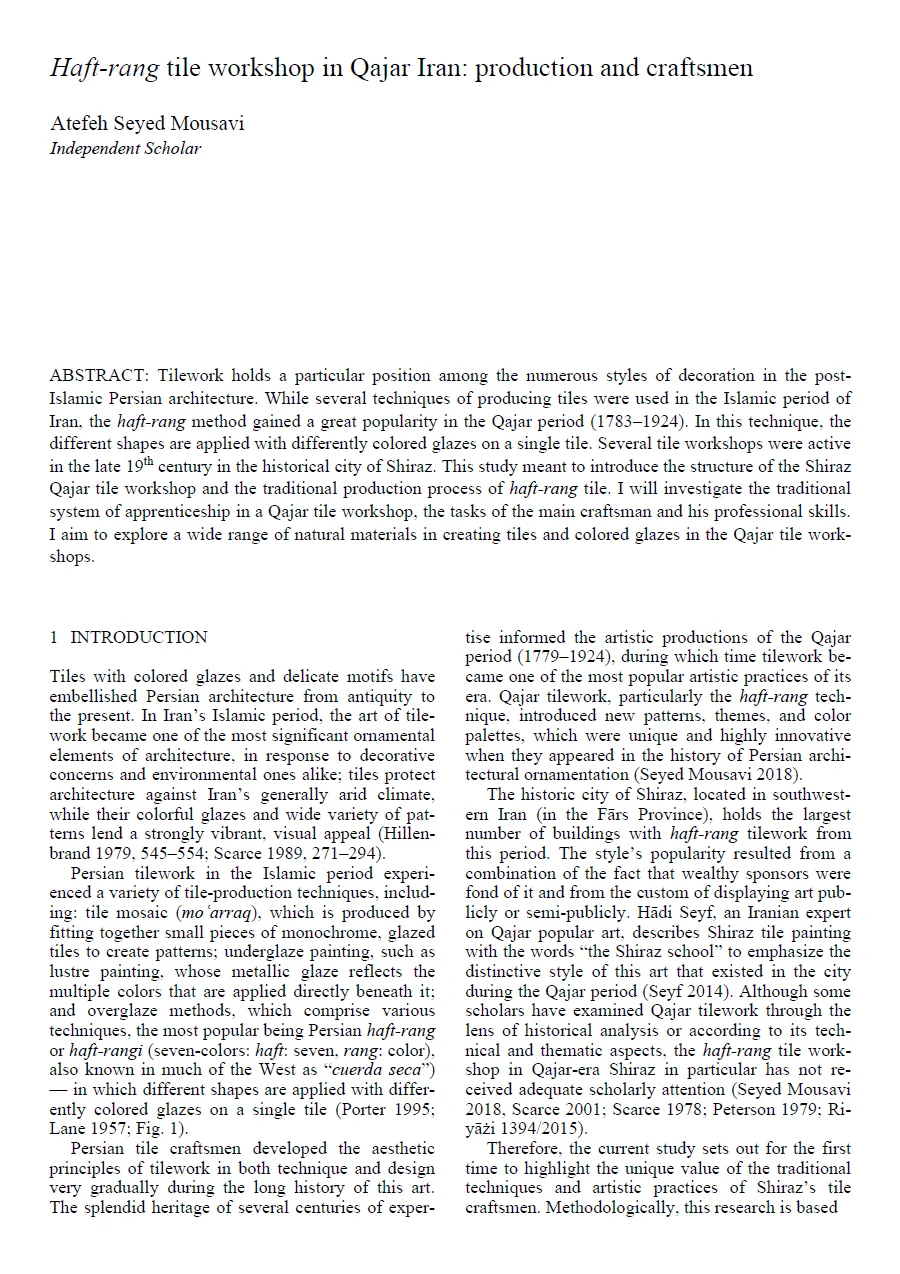
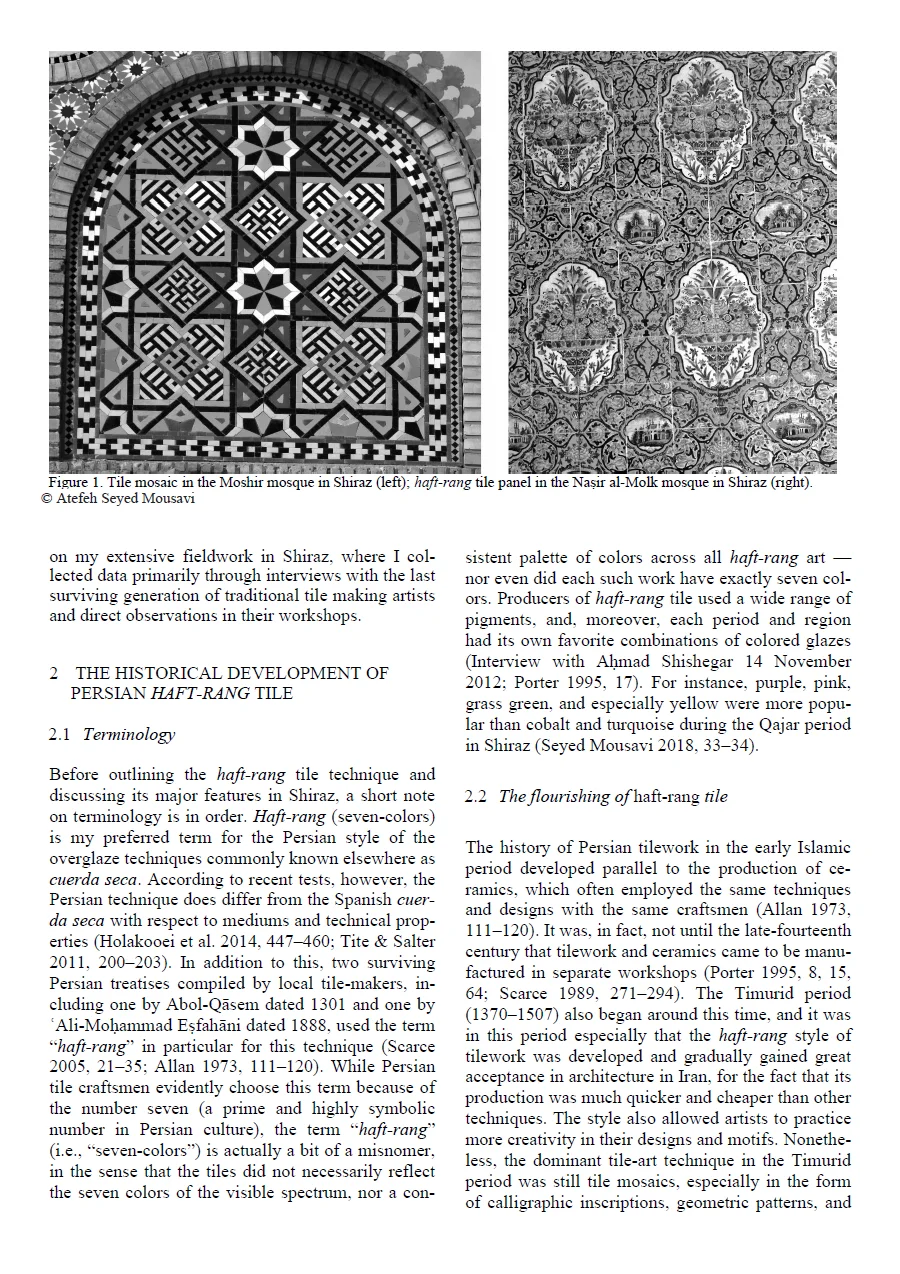
Haft-rang tile workshop in Qajar Iran: Production and craftsmen

2021, Taylor & Francis

Tilework holds a particular position among the numerous styles of decoration in post-Islamic Persian architecture. While several techniques of producing tiles were used in the Islamic period of Iran, the haftrang method gained great popularity in the Qajar period (1783-1924). In this technique, the different shapes are applied with differently colored glazes on a single tile. Several tile workshops were active in the late 19th century in the historical city of Shiraz. This study means to introduce the structure of the Shiraz Qajar tile workshop and the traditional production process of haft-rang tile. It investigates the traditional system of apprenticeship in a Qajar tile workshop and the tasks of the main craftsman and his professional skills, exploring a wide range of natural materials in creating tiles and colored glazes in the Qajar tile workshops.

Click here for more information

Haft-rang tile workshop in Qajar Iran Haft-rang tile workshop in Qajar Iran
Production and craftsmen Production and craftsmen

The Popularity of Narrative Tile Painting in the Qajar Period

2021, Dr. Ludwig Reichert Verlag Wiesbaden

The paper explores the growth of narrative tile painting during the Qajar period in Iran, highlighting its emergence as an important form of visual art combining storytelling with decorative architecture. It examines the relationship between narrative tiles and popular culture, tracing thematic influences from literature, religious practices, and public performances. The study focuses on the extensive collection of narrative tilework in Shiraz, aiming to classify the various narratives depicted and their cultural significance during the late 18th to early 20th centuries in Iran.

Click here for more information